Aggregation, Public Criticism, and the History of Reading Big Data
What is big information analytics?
Large data analytics is the often complex process of examining large data to uncover information -- such as subconscious patterns, correlations, market trends and customer preferences -- that can help organizations make informed business decisions.
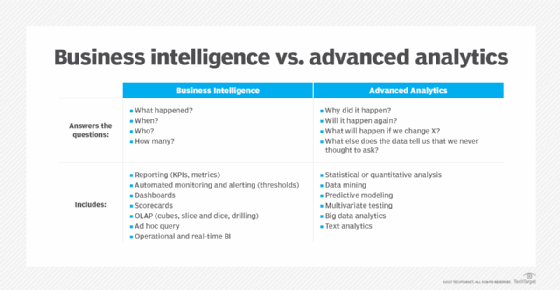
On a broad scale, data analytics technologies and techniques give organizations a way to analyze information sets and gather new information. Concern intelligence (BI) queries answer basic questions virtually business operations and performance.
Big data analytics is a form of advanced analytics, which involve circuitous applications with elements such as predictive models, statistical algorithms and what-if analysis powered by analytics systems.
Why is big data analytics important?
Organizations can use big information analytics systems and software to make data-driven decisions that can ameliorate business-related outcomes. The benefits may include more effective marketing, new revenue opportunities, customer personalization and improved operational efficiency. With an constructive strategy, these benefits can provide competitive advantages over rivals.
How does big information analytics piece of work?
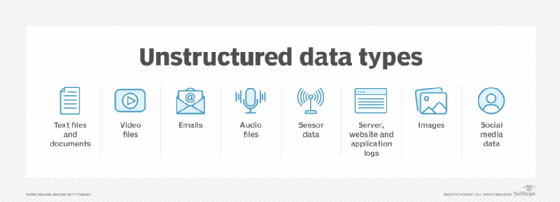
Data analysts, information scientists, predictive modelers, statisticians and other analytics professionals collect, process, clean and clarify growing volumes of structured transaction data as well as other forms of information not used by conventional BI and analytics programs.
Here is an overview of the four steps of the big data analytics procedure:
- Data professionals collect data from a variety of different sources. Often, it is a mix of semistructured and unstructured data. While each system will use different information streams, some common sources include:
- internet clickstream data;
- web server logs;
- deject applications;
- mobile applications;
- social media content;
- text from customer emails and survey responses;
- mobile telephone records; and
- car data captured past sensors connected to the internet of things (IoT).
- Information is prepared and processed. Afterward data is collected and stored in a data warehouse or information lake, data professionals must organize, configure and partition the data properly for analytical queries. Thorough data preparation and processing makes for higher operation from analytical queries.
- Data is apple-pie to meliorate its quality. Information professionals scrub the data using scripting tools or data quality software. They look for any errors or inconsistencies, such equally duplications or formatting mistakes, and organize and tidy upwardly the data.
- The nerveless, processed and cleaned data is analyzed with analytics software. This includes tools for:
- data mining, which sifts through data sets in search of patterns and relationships
- predictive analytics, which builds models to forecast client beliefs and other future actions, scenarios and trends
- machine learning, which taps various algorithms to analyze large data sets
- deep learning, which is a more advanced offshoot of motorcar learning
- text mining and statistical assay software
- artificial intelligence (AI)
- mainstream business intelligence software
- data visualization tools
Key big data analytics technologies and tools
Many unlike types of tools and technologies are used to support big data analytics processes. Common technologies and tools used to enable big data analytics processes include:
- Hadoop , which is an open source framework for storing and processing big data sets. Hadoop can handle large amounts of structured and unstructured information.
- Predictive analytics hardware and software, which process big amounts of complex information, and utilize automobile learning and statistical algorithms to make predictions about future event outcomes. Organizations employ predictive analytics tools for fraud detection, marketing, risk assessment and operations.
- Stream analytics tools, which are used to filter, amass and analyze big data that may be stored in many different formats or platforms.
- Distributed storage information, which is replicated, generally on a non-relational database. This can be every bit a measure out against independent node failures, lost or corrupted large information, or to provide low-latency admission.
- NoSQL databases, which are not-relational data management systems that are useful when working with big sets of distributed data. They do not require a stock-still schema, which makes them platonic for raw and unstructured data.
- A data lake is a large storage repository that holds native-format raw data until information technology is needed. Data lakes utilize a flat compages.
- A data warehouse , which is a repository that stores large amounts of data collected by different sources. Data warehouses typically store data using predefined schemas.
- Cognition discovery/big data mining tools, which enable businesses to mine big amounts of structured and unstructured big data.
- In-memory data fabric, which distributes large amounts of data across organisation memory resources. This helps provide depression latency for data admission and processing.
- Data virtualization, which enables data admission without technical restrictions.
- Information integration software, which enables big data to be streamlined across different platforms, including Apache, Hadoop, MongoDB and Amazon EMR.
- Data quality software, which cleanses and enriches large data sets.
- Data preprocessing software, which prepares information for further analysis. Data is formatted and unstructured data is apple-pie.
- Spark, which is an open source cluster computing framework used for batch and stream data processing.
Large data analytics applications oft include data from both internal systems and external sources, such equally weather condition data or demographic information on consumers compiled by third-party information services providers. In addition, streaming analytics applications are becoming common in big data environments as users look to perform real-time analytics on data fed into Hadoop systems through stream processing engines, such as Spark, Flink and Storm.
Early large data systems were by and large deployed on bounds, particularly in big organizations that collected, organized and analyzed massive amounts of data. Only cloud platform vendors, such every bit Amazon Web Services (AWS), Google and Microsoft, have made it easier to set upwards and manage Hadoop clusters in the cloud. The same goes for Hadoop suppliers such as Cloudera, which supports the distribution of the big data framework on the AWS, Google and Microsoft Azure clouds. Users can now spin up clusters in the cloud, run them for as long as they need so take them offline with usage-based pricing that doesn't require ongoing software licenses.
Big data has become increasingly beneficial in supply concatenation analytics. Big supply concatenation analytics utilizes big data and quantitative methods to enhance decision-making processes beyond the supply chain. Specifically, large supply concatenation analytics expands data sets for increased assay that goes beyond the traditional internal information plant on enterprise resource planning (ERP) and supply concatenation management (SCM) systems. Also, big supply chain analytics implements highly effective statistical methods on new and existing information sources.
Big data analytics uses and examples
Hither are some examples of how big data analytics tin can exist used to help organizations:
- Customer acquisition and retention. Consumer data can help the marketing efforts of companies, which can act on trends to increase customer satisfaction. For instance, personalization engines for Amazon, Netflix and Spotify can provide improved client experiences and create customer loyalty.
- Targeted ads. Personalization data from sources such equally past purchases, interaction patterns and product page viewing histories can help generate compelling targeted advertisement campaigns for users on the private level and on a larger scale.
- Production development. Big information analytics can provide insights to inform nigh production viability, development decisions, progress measurement and steer improvements in the direction of what fits a business organization' customers.
- Price optimization. Retailers may opt for pricing models that use and model data from a variety of information sources to maximize revenues.
- Supply chain and channel analytics. Predictive analytical models tin can assistance with preemptive replenishment, B2B supplier networks, inventory management, road optimizations and the notification of potential delays to deliveries.
- Risk direction. Big data analytics can place new risks from data patterns for effective risk management strategies.
- Improved controlling. Insights business users excerpt from relevant data tin help organizations make quicker and meliorate decisions.
Large data analytics benefits
The benefits of using big information analytics include:
- Quickly analyzing big amounts of data from different sources, in many different formats and types.
- Chop-chop making better-informed decisions for effective strategizing, which can benefit and improve the supply chain, operations and other areas of strategic controlling.
- Cost savings, which tin event from new business organisation procedure efficiencies and optimizations.
- A better understanding of customer needs, behavior and sentiment, which can lead to amend marketing insights, as well equally provide information for production development.
- Improved, ameliorate informed run a risk management strategies that draw from large sample sizes of data.
Big data analytics challenges
Despite the wide-reaching benefits that come with using big data analytics, its apply also comes with challenges:
- Accessibility of data. With larger amounts of information, storage and processing get more complicated. Big data should be stored and maintained properly to ensure it tin can exist used by less experienced data scientists and analysts.
- Data quality maintenance. With high volumes of data coming in from a variety of sources and in dissimilar formats, data quality management for big information requires meaning time, attempt and resources to properly maintain it.
- Information security. The complexity of big data systems presents unique security challenges. Properly addressing security concerns within such a complicated big data ecosystem can exist a complex undertaking.
- Choosing the right tools. Selecting from the vast array of big data analytics tools and platforms available on the market can exist disruptive, so organizations must know how to pick the best tool that aligns with users' needs and infrastructure.
- With a potential lack of internal analytics skills and the high toll of hiring experienced data scientists and engineers, some organizations are finding it hard to fill the gaps.
History and growth of big data analytics
The term large information was first used to refer to increasing information volumes in the mid-1990s. In 2001, Doug Laney, then an analyst at consultancy Meta Grouping Inc., expanded the definition of big data. This expansion described the increasing:
- Volume of data beingness stored and used by organizations;
- Variety of information being generated by organizations; and
- Velocity, or speed, in which that data was beingness created and updated.
Those three factors became known equally the 3Vs of large data. Gartner popularized this concept after acquiring Meta Group and hiring Laney in 2005.
Another significant development in the history of big data was the launch of the Hadoop distributed processing framework. Hadoop was launched as an Apache open source project in 2006. This planted the seeds for a clustered platform built on meridian of article hardware and that could run large data applications. The Hadoop framework of software tools is widely used for managing big information.
By 2011, big data analytics began to accept a business firm agree in organizations and the public eye, along with Hadoop and diverse related big data technologies.
Initially, as the Hadoop ecosystem took shape and started to mature, big information applications were primarily used by large internet and e-commerce companies such as Yahoo, Google and Facebook, as well as analytics and marketing services providers.
More recently, a broader variety of users have embraced big data analytics every bit a central engineering driving digital transformation. Users include retailers, financial services firms, insurers, healthcare organizations, manufacturers, energy companies and other enterprises.
This was final updated in December 2021
Go on Reading About big data analytics
- How to build an all-purpose big data pipeline architecture
- six large data benefits for businesses
- How to build an enterprise big information strategy in four steps
- 10 big data challenges and how to accost them
- Top 25 big data glossary terms you should know
Dig Deeper on Data science and analytics
-

Hadoop

By: Craig Stedman
-

Hadoop as a service (HaaS)

By: Sarah Wilson
-

The primary picks for Hadoop distributions on the market

Past: Linda Rosencrance
-

Big Information Deject Service streamlines Oracle Hadoop deployments

By: Robert Sheldon
Source: https://www.techtarget.com/searchbusinessanalytics/definition/big-data-analytics
0 Response to "Aggregation, Public Criticism, and the History of Reading Big Data"
Post a Comment